All you need to know before your first rafting activity
Before your first white water rafting trip, it helps to know what to wear, how confident in the water you need to be and what happens if you fall in. It's an adventure that allows a unique way to experience the great outdoors, so whether you're seeking an adrenaline-fuelled journey or an exciting new way to enjoy nature with friends and family, white water rafting is a great choice. Here’s your essential guide to make your first rafting trip enjoyable, safe, and unforgettable.
Good first rafting trips to book
- Cardiff International White Water: Family White Water Rafting runs with the pumps turned down for gentler rapids, from age 6, with all kit provided.
- Adventures Wales: a full day on a natural river near Porthcawl, with 3 to 4 descents after a safety briefing.
- Holme Pierrepont Canoe Club: beginner raft racing sessions in Nottingham, where coaches teach you to control a raft as a team (ages 14+).
What to wear
The key to a comfortable rafting experience lies in your attire. Steer clear of cotton, as it absorbs water and chills the body. Opt instead for materials like polyester, nylon, or wool, which dry quickly and maintain warmth. Essential items include:
- Wetsuit: Vital in colder waters to retain body heat. Many centres provide one, including Cardiff International White Water and Adventures Wales, but check when you book.
- Water shoes: Closed-toe shoes are a must for protection and grip. Some centres provide wetsuit boots; if not, an old pair of trainers works well.
- Sun protection: A combination of waterproof sunscreen, sunglasses with retention straps, and a hat will protect against sunburn.
- Safety gear: Helmets and life jackets are non-negotiable and are provided by your rafting company.
Preparing for the experience
Physical fitness: While you don’t need to be in peak condition, a basic level of fitness enhances your enjoyment and endurance, especially since paddling and potentially swimming are involved.
Swimming ability: By no means do you have to be an Olympic swimmer, but a basic level of swimming and being comfortable in the water is necessary, not only for your safety but very often you won’t even be allowed to take part in the activity if you can’t swim.
Understanding river classes: Rivers are classified I to VI, reflecting their navigational challenges:
- Class I: Gentle, straightforward currents.
- Class II: Slightly more challenging with simple rapids.
- Class III: Moderate difficulty with irregular waves.
- Class IV: Advanced, demanding precise navigation.
- Class V: Expert level, with intense and dangerous rapids.
- Class VI: Extreme, often considered impassable.
Beginners typically start with Class I or II rapids, offering a manageable yet thrilling introduction to rafting.
During the adventure
A group activity: Rafting is a fantastic group activity since there's room for several people in a raft (often six to eight). You can bring friends and family for a shared adventure, or join as a solo participant and bond with new people.
Teamwork is crucial: Rafting requires coordinated effort. Listen to your guide’s commands and cooperate with your teammates for a smooth ride. Communication and working as a team is essential.
Capsizing: It’s possible to capsize in rougher waters. If this happens, stay calm and listen to your guide. They will instruct you on how to safely return to the raft or swim to a calm area.
Enjoying the experience
Respect the river: Acknowledge the power of the river and adhere strictly to safety guidelines. Your guide’s expertise is invaluable, ensuring a thrilling yet safe adventure.
Savour the moment: Amidst the focus on paddling and navigating rapids, don’t forget to appreciate the surrounding natural beauty. Rafting offers a unique perspective on the landscape, often inaccessible by other means.
First rafting trip FAQs
Do you need to be able to swim to go white water rafting?
You don't need to be a strong swimmer, but you should be comfortable in water. Centres such as Cardiff International White Water ask that rafters are confident in and around water, and everyone wears a buoyancy aid and helmet.
How old do you need to be for your first rafting trip?
It depends on the centre and the water. Cardiff International White Water's family sessions are from age 6 because the rapids are gentler, while its standard White Water Rafting is from 12.
What happens if the river is too low?
Natural rivers depend on rainfall, so plans can change at short notice. Adventures Wales, for example, switches its rafting day to gorge scrambling if river levels aren't suitable, and asks you to check with them at least 24 hours before. Man-made courses pump their own water, so they're more predictable.
Still deciding where to go? See the best spots for white water rafting in England and the best places for rafting in Wales.
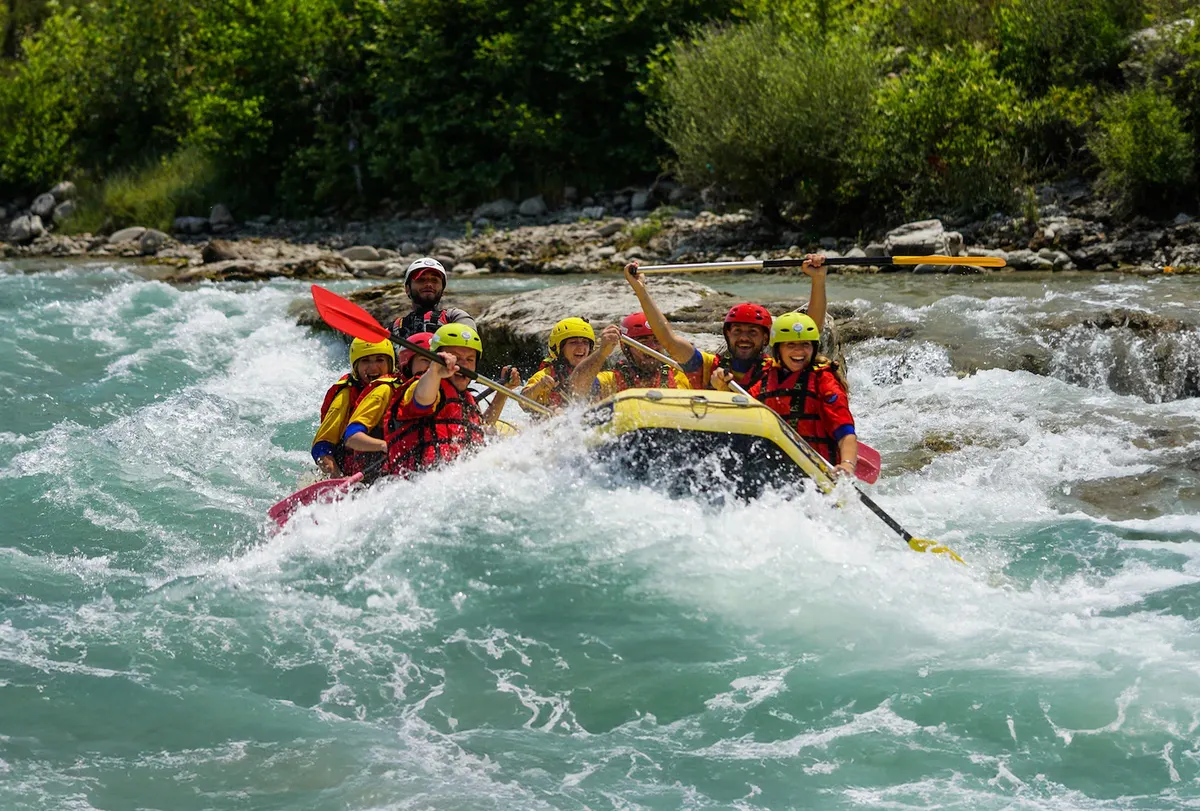
White water rafting is an exceptional adventure that combines physical challenge, teamwork, and the unparalleled beauty of nature.
Whether you’re a first-timer or a seasoned rafter, the river offers a fresh adventure every time, with each rapid and bend bringing its own set of challenges and joys.
Prepare to paddle, laugh, and maybe even swim a bit, but most importantly, get ready to make memories that will last a lifetime on the river!
-
Need for a booking system to help you run your outdoor activities? eola is dedicated to helping instructors and outdoor activity centres share their passion with more people. We reduce your administrative burdens, so you can have more time to spend doing what you love. Find out more at our watersports page.
Looking for more ways to get outdoors? Check out All you need to know about white water rafting and Best spots for white water rafting in the UK.
Are you a rafting instructor or own a rafting centre? Find out more about how eola can help you grow your business this year and make your day-to-day operations easier!
Follow us on Instagram, Facebook and LinkedIn to keep up with the latest updates, and take a look at eola marketplace to find more great activities near you!